Illinois AI Regulation for Businesses: Why Businesses Need a Seat at the Table

Table of Contents

Illinois as the First State Leading AI Regulation

Illinois has long been known as the first state to pass groundbreaking tech and privacy laws. 

From the Biometric Information Privacy Act (BIPA) to the Artificial Intelligence Video Interview Act, lawmakers in Springfield have shown they’re willing to push the envelope on ai laws. 

Now, with generative artificial intelligence and other artificial intelligence technology becoming mainstream, the focus is shifting to how Illinois employers use these tools in employment decisions and beyond.

Governor JB Pritzker and the Illinois Human Rights Commission have made it clear: Illinois will continue leading the United States on AI regulation. Businesses that rely on a machine based system for employment related decisions — including video interviews, hiring tools, and employment agencies — need to prepare for new law requirements that could take effect with a specific effective date.


💡 Did You Know?

Illinois was not only the first state to pass BIPA, but it’s also one of the only states where an alleged violation can trigger a private right of action. That means job applicants or consumers don’t have to wait for the Attorney General — they can go straight to court. That single detail has made Illinois a national model for AI regulation and a cautionary tale for employers.


The Use of AI Tools and Consequential Decisions

Many employers use AI for hiring, promotions, and even renewal of employment. But with that comes the risk of algorithmic discrimination or discriminatory outcomes based on demographic data such as national origin, sexual orientation, marital status, military status, or order of protection status.

These are considered conditions of employment under the Illinois Human Rights Act and monitored by the Illinois Department of Human Rights. If an artificial intelligence system has a discriminatory effect, that could amount to unlawful discrimination or even a civil rights violation.

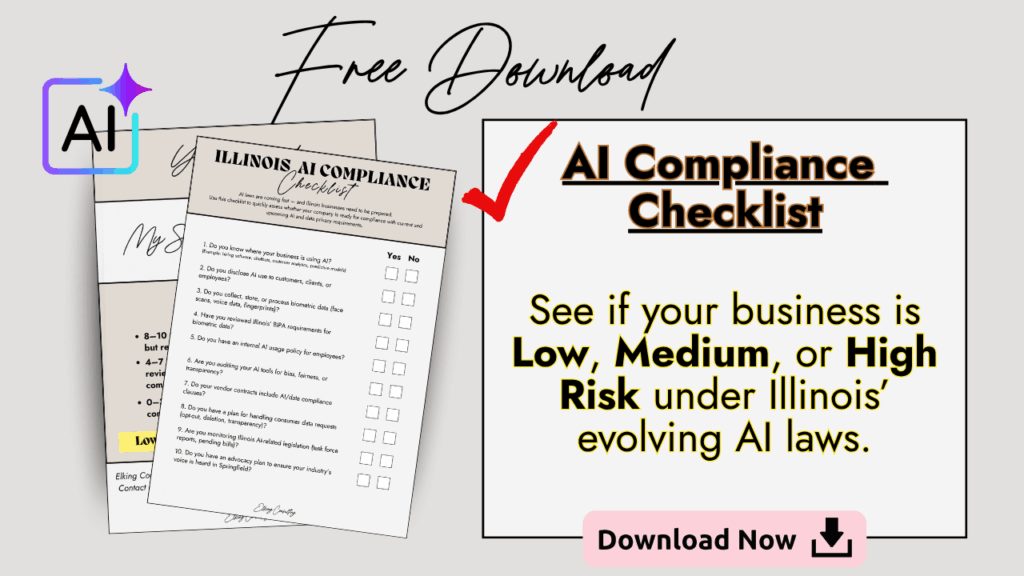
Because of this, the state is considering requirements like:

  • Bias audits on high risk AI systems
  • Impact assessments before using such technology in employment practices
  • A notice requirement for job applicants if AI is part of the process
  • Stronger consumer protection rules on how personal data and personal information are handled

Why Illinois Employers Need Advocacy

Illinois isn’t alone — New York City, New Jersey, and Colorado AI Act have passed or proposed a similar law on AI and employment law. The EU AI Act is already setting the tone internationally. But Illinois stands out because of its history with strong state laws on privacy and employment related decisions.

The challenge is that businesses face overlapping requirements from local laws, state laws, and even the federal court system. One house bill might require an effective January compliance deadline, while another sets a calendar year reporting obligation or measures by calendar weeks. This patchwork creates confusion and increases the need for legal counsel, risk management policy, and best practices.

Why Staying Silent on AI Laws is a Risk

The old saying applies here: if you’re not at the table, you’re on the menu.

When businesses don’t engage in AI policy discussions:

  • Compliance risk: Laws may be written without considering real-world applications, making compliance costly or confusing.
  • Innovation risk: Overly strict regulations could slow down AI adoption in Illinois industries.
  • Competitive risk: Companies that aren’t proactive may fall behind competitors who helped shape the rules.

On the other hand, businesses that engage in Illinois AI regulation for businesses often position themselves as leaders — building trust, shaping fairer laws, and influencing best practices before mandates are finalized.

Illinois State Capitol Building
Insider Note

Most people don’t realize how quickly an Illinois House Bill can move from introduction to committee vote. Sometimes, a bill affecting AI use in employment practices can pass out of committee within just a few calendar weeks. By the time a business notices it, it’s already heading to the floor for debate.

This is why having a lobbyist monitoring Springfield is critical — we see it in real time, not after the fact.

The Role of Advocacy in Illinois AI Regulation

Advocacy is not about opposing laws — it’s about making sure they are workable, effective, and informed.

Illinois legislators want to protect consumers, but they need technical and business input to avoid unintended consequences. By providing testimony, engaging with coalitions, and working with lobbyists who specialize in tech policy, companies can ensure their voices are heard in Springfield.

Effective advocacy helps strike the right balance between innovation and accountability.

Sidenote from Springfield

💡 During the last session, more than a dozen bills touching on artificial intelligence systems were filed — ranging from consumer protection to employment law. While not all advanced, the sheer volume shows how seriously Illinois Governor JB Pritzker and the General Assembly are treating AI regulation. Being at the Capitol allows lobbyists to separate which bills are symbolic and which ones have real momentum. Schedule a call with Elking Consulting if you want to talk about these bills might affect your business.

Why Elking Consulting is Your AI Advocacy Partner

At Elking Consulting, we sit at the intersection of Illinois politics, AI adoption, and data privacy regulation.

  • We’ve helped clients navigate complex laws like BIPA, procurement codes, and state compliance frameworks.
  • We understand how Illinois policy is written — and how quickly it can change.
  • We specialize in helping businesses advocate for fair, balanced AI regulation that protects consumers and allows innovation to thrive.

Our mission: to help your business not only stay compliant but also shape the future of Illinois AI regulation for businesses.

Conclusion

Illinois is setting the pace for AI and data privacy laws. The only question is: will your business be part of shaping the future, or scrambling to catch up once the laws are already in place?

Don’t wait until new regulations take you by surprise. Contact Elking Consulting today to make sure your business has a seat at the table in Springfield.

TIFFANY ELKING

FAQ: Illinois AI Regulation for Businesses

What is the Artificial Intelligence Video Interview Act?

It’s an Illinois law requiring employers to notify job applicants when they use AI in video interviews and to get consent before using such technology.

What happens if a company ignores AI laws?

An alleged violation can lead to civil action, civil penalties, and even claims of unlawful discrimination. Employers may also owe attorneys fees if found liable for a civil rights violation.

Are Illinois AI laws unique?

Yes. While New York City, New Jersey, and the Colorado AI Act have passed a similar law, Illinois is often the first state to create broad ai regulation that influences other state laws and even the EU AI Act.

Who enforces Illinois AI employment practices?

The Illinois Department of Human Rights and the Illinois Human Rights Commission oversee enforcement related to the Illinois Human Rights Act, including AI in employment practices.

What are some best practices for employers using AI tools?

Some best practices for employers using AI tools are:

  • Conduct bias audits with third party vendors before deploying generative AI or any automated computing system.
  • Document impact assessments to show compliance with key provisions of the law.
  • Work with firms, service providers, and labor organizations to align with best practices.
  • Always ensure human produced content supplements decisions made by artificial intelligence systems.

By taking these steps, businesses protect themselves and demonstrate good faith under Illinois law.